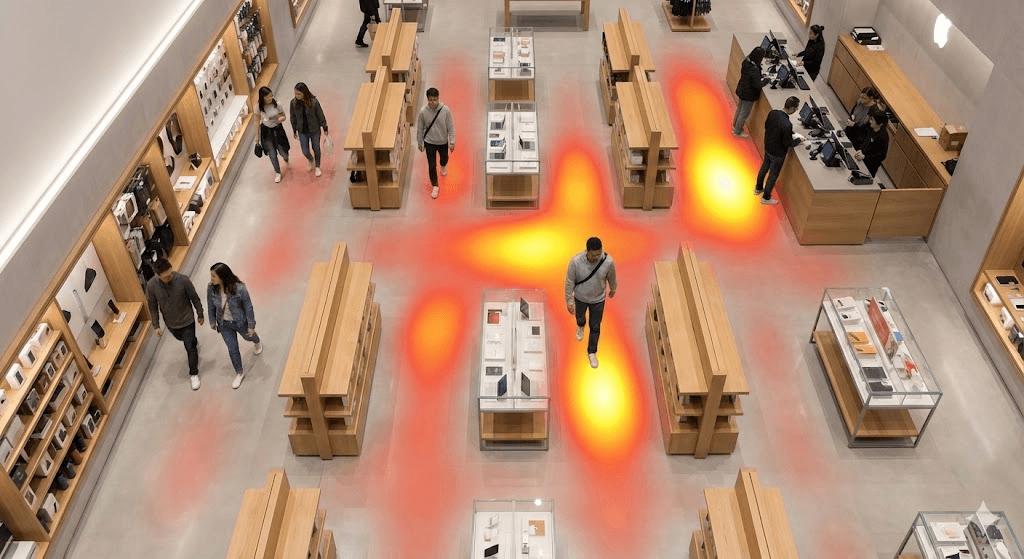
In-store heatmaps help retailers visualize customer movement, identify high- and low-engagement zones, and optimize product placement. Learn how retail heatmap analytics improve visibility, store layout, and sales performance.
Introduction: Visual Data Creates Better Retail Decisions
Product visibility is one of the strongest drivers of in-store sales, yet many retailers struggle to measure which areas truly capture customer attention. In-store heatmaps solve this challenge by transforming customer movement and engagement into clear visual insights.
Intelense provides real-time retail heatmap analytics that help retailers understand how shoppers interact with the store environment and where attention naturally flows.
What In-Store Heatmaps Reveal About Customer Behavior
In-store heatmaps convert thousands of data points into an easy-to-understand visual layer, highlighting patterns that are difficult to detect through traditional reports.
High-Interest Zones
These are areas where customers pause, browse, or spend more time. Retailers can place high-margin, new, or promotional products in these zones to increase visibility and conversion.
Low-Interest or Dead Zones
These areas receive minimal customer engagement. Heatmaps help identify layout issues, poor sightlines, or ineffective product placement that may be causing underperformance.
Customer Pathways and Navigation Patterns
Customer movement heatmaps reveal natural walking paths inside the store. These insights help retailers design clearer layouts and guide customers toward priority zones.
Display and Promotion Performance
Heatmaps make it easy to measure whether displays and promotions are drawing attention or being overlooked, enabling faster layout and merchandising improvements.
How Heatmaps Improve Product Visibility and Sales
Retail heatmap analytics deliver actionable insights that directly impact store performance. Retailers can:
Move key products to high-engagement zones
Improve visibility in underperforming areas
Test and compare different store layouts
Optimize customer flow and reduce congestion
Allocate staff to areas with higher interaction
Improved visibility leads to better engagement, stronger conversion rates, and higher overall sales.
Conclusion: Heatmaps as a Core Retail Strategy
In-store heatmaps provide retailers with the clarity needed to optimize layouts, enhance product visibility, and improve customer experience. Intelense enables data-driven decisions through visual behavior intelligence that reflects real shopper movement.
Heatmaps are not just an analytical tool. They are a strategic advantage for retailers looking to understand customer behavior and increase in-store sales.