Autonomous Systems AI

Autonomous. Intelligent.
Unstoppable.

The AI brain for the next generation of robot fleets. KenRobotics delivers sub-50ms scene perception, dynamic path planning, and multi-robot coordination; so your autonomous systems can operate at industrial scale.

<50ms Perception 99% Navigation Accuracy 60% Efficiency Gain 10× Fleet Scale
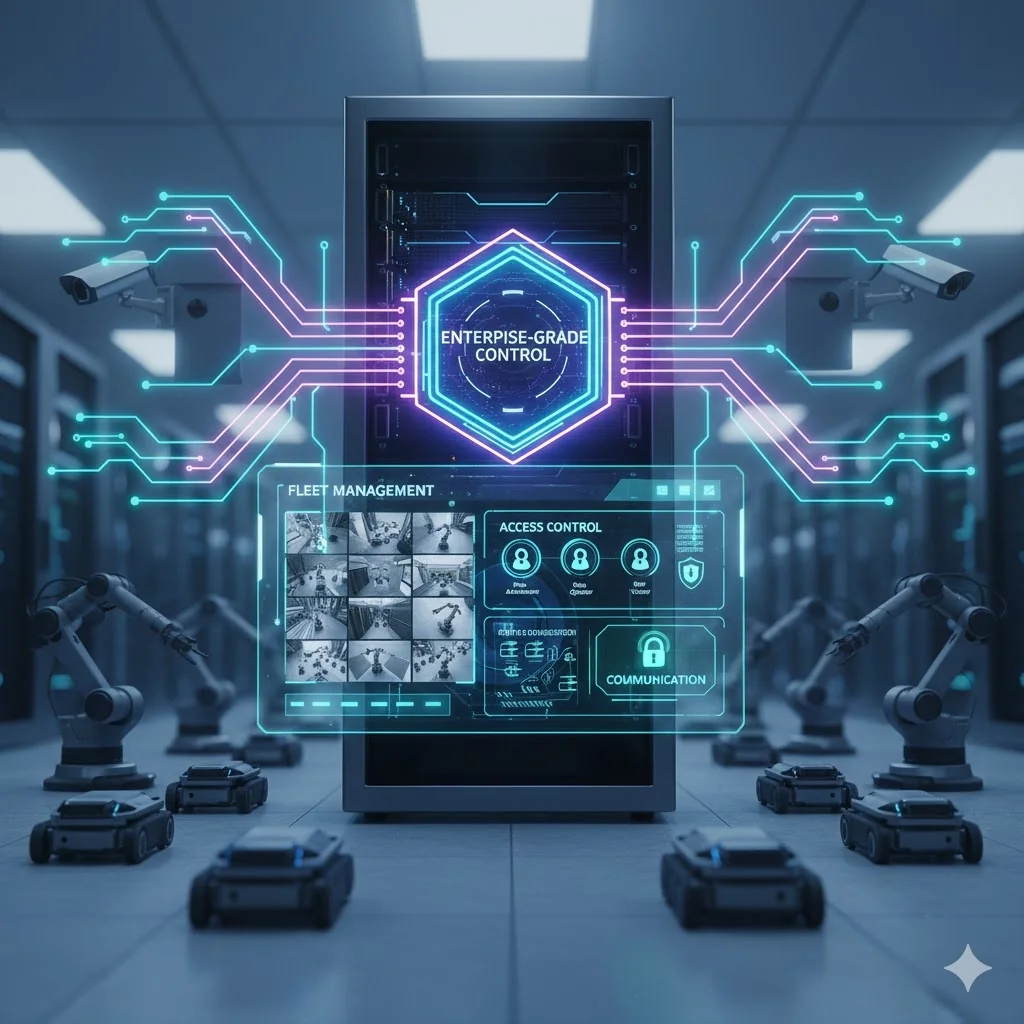
KenRobotics enterprise fleet control
How It Works

How KenRobotics Works

From hardware integration to autonomous fleet operation — robotics intelligence in three steps.

01

Integrate Your Hardware

Connects to any robot platform via ROS/ROS2 SDK, REST API, or direct hardware interface — onboard new robots in hours, not weeks.

ROS / ROS2 REST API Any Platform
02

AI Perception & Planning

Fuses all sensor streams into a real-time world model. Path planning, obstacle avoidance, and task allocation happen autonomously — with human override always available.

Sensor Fusion Path Planning Obstacle Avoidance
03

Scale Your Fleet

Add robots without complexity. KenRobotics automatically incorporates new units, balances workloads, and maintains performance as your operation grows.

Fleet Management Auto Load Balance Live Dashboard
Industries

Where KenRobotics Delivers

Autonomous systems intelligence deployed across the sectors that need it most.

KenRobotics Results

The Intelligence Your Robots Need

<50ms Perception Speed Real-time scene understanding
99% Navigation Accuracy In complex dynamic environments
60% Efficiency Gain Vs manual operations
10× Fleet Scale Per deployment, single control plane
Beta Program

Shape the Future of Autonomous AI

Join KenRobotics' beta program. Get early access, dedicated engineering support, and influence the product roadmap.

FAQ

Frequently Asked Questions

How does KenRobotics handle situations where humans are working in the same space as the robots?

KenRobotics uses real-time human detection with dynamic safety zones. When a person enters a robot's operating area, the system automatically adjusts the robot's speed, path, and clearance radius. Persistent presence triggers a hold. The safety zone parameters are configurable per zone and per shift — tighter during high-traffic periods, wider in autonomous overnight runs.

What happens if a robot loses connectivity mid-task?

Each robot running KenRobotics has an on-board edge controller that maintains the last-known mission state. On connectivity loss, the robot completes its current micro-task safely, then enters a standby hold at the nearest safe position. The fleet coordinator marks it as unreachable and redistributes its pending tasks to other robots. When connectivity resumes, the robot re-registers and rejoins the fleet automatically.

How does KenRobotics handle conflicting task priorities across the fleet?

KenRobotics uses a priority-weighted task scheduler. Each task is assigned a priority level — urgent replenishment, standard cycle, maintenance — and the scheduler continuously optimises fleet allocation to maximise throughput on highest-priority tasks. When two robots need the same aisle simultaneously, the scheduler resolves the conflict using predicted completion times and reroutes the lower-priority robot without human intervention.

Can KenRobotics be trained on our specific warehouse layout and workflow rules?

Yes. At deployment, KenRobotics ingests your floor plan, defined zones, prohibited areas, and workflow rules (pick sequences, staging locations, no-go hours). The path planning and task scheduling engines operate within those constraints. Layout changes are updated via the dashboard — you redraw the map, publish it, and the fleet adapts within minutes.

What is the process for adding a new robot model to an existing KenRobotics deployment?

KenRobotics supports new robot models via our open SDK and standard ROS2 integration. For certified robot platforms, onboarding takes 1-3 days: install the KenRobotics edge module, run a calibration sequence, and the robot joins the fleet. For custom or non-standard platforms, our engineering team works with you on a custom integration — typical timeline is 2-3 weeks.