 Case Study
Smarter Farming with
Real-Time AI Insights,
Crop Protection &
Farm Intelligence
The Challenge
Traditional farming methods leave farmers exposed to unpredictable risks, inefficient monitoring, and reactive decision-making. Despite significant investments in irrigation, pesticides, and labor, farms continue to face major yield losses, resource waste, and regulatory pressure — all rooted in a lack of real-time visibility and actionable, data-driven insights at the field level.
Crop Health & Pest Risks
Farmers frequently miss the early signs of disease, nutrient deficiency, or pest infestation. Manual field scouting is slow, inconsistent, and dependent on individual expertise. Without continuous monitoring, threats spread across entire fields before they are noticed, leading to delayed intervention, reduced yields, and higher crop losses.
Resource & Operational Inefficiencies
Irrigation, labor, and machinery are routinely over- or under-utilized. Soil moisture, temperature, and nutrient levels vary significantly across zones, yet without real-time monitoring, uniform application remains the default — causing water wastage, uneven crop growth, and inflated operational costs.
Lack of Real-Time Insights & Proactive Decisions
Environmental risks — weather shifts, flooding, soil stress, frost events — go undetected until damage has already occurred. Traditional tools provide historical snapshots, not actionable intelligence. Farmers are forced into reactive decision-making with no integrated view of what is happening across the entire farm in real time.
Case 1: Agriculture & Precision Farming
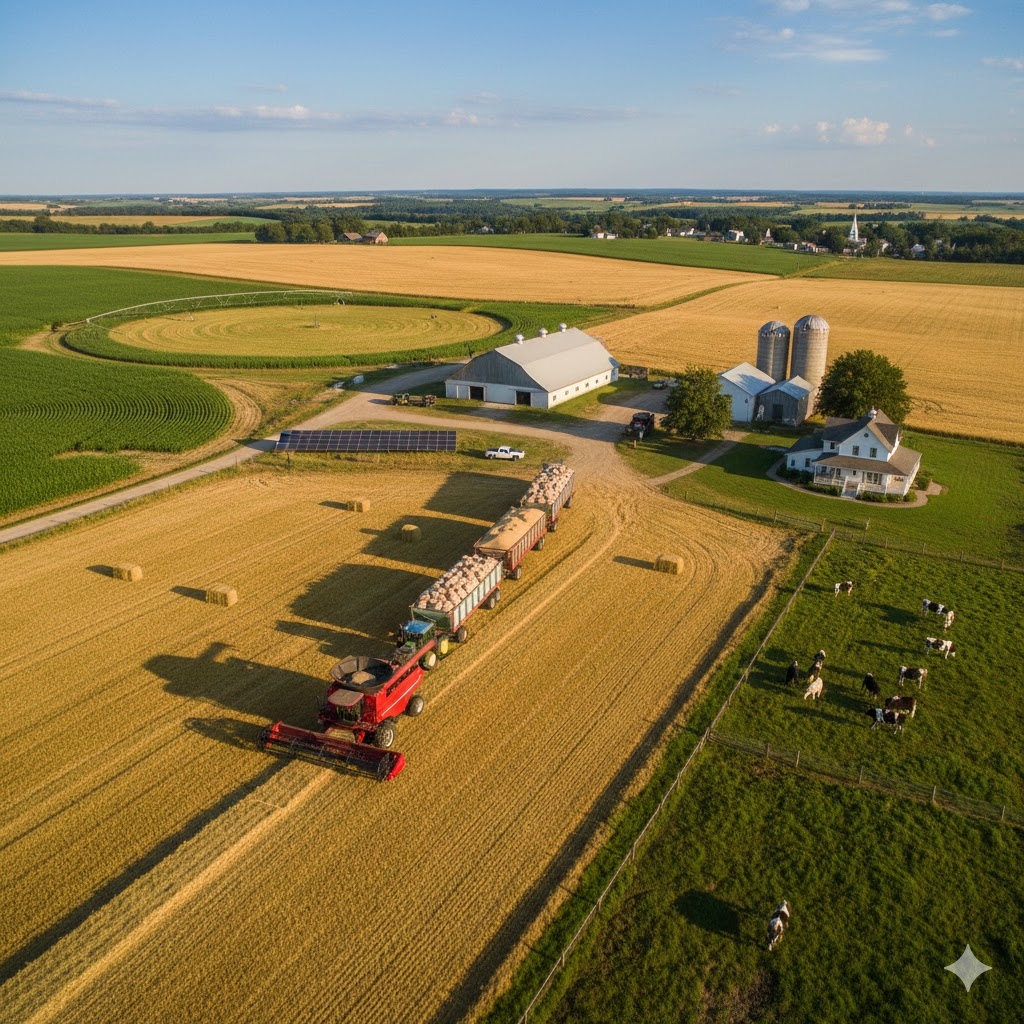
Large-scale and mid-sized farm operations where crop health, resource optimization, livestock safety, and regulatory compliance must be continuously monitored — across multiple field zones, seasons, and variable environmental conditions — using AI-powered intelligence deployed over existing camera and sensor infrastructure.
Crop & Field Risks
- Rapid spread of fungal, bacterial, and pest damage before detection
- Nutrient deficiencies identified too late to correct effectively
- Irrigation overrun or underwatering causing stress and yield loss
- Weather-triggered crop damage with no advance warning system
- Wildlife and livestock intrusion into protected crop zones
Operational Monitoring Gaps
- Manual scouting that doesn't scale across large multi-zone farms
- No real-time visibility into equipment location or field activity
- Blind spots in remote or hard-to-reach areas of the farm
- Inconsistent labor activity across planting and harvest cycles
- Delayed response to irrigation failures or machinery breakdowns
Data & Compliance Challenges
- Fragmented pesticide and treatment records across growing seasons
- No continuous audit trail for organic or food-safety certifications
- Disconnected data sources making yield forecasting unreliable
- Growing pressure from buyers and regulators for traceable records
- Inability to demonstrate environmental stewardship with evidence
Result
Failure to enforce real-time crop monitoring and farm intelligence leads to preventable yield losses, wasted inputs, undetected threats, and growing inability to meet the traceability and compliance standards demanded by regulators, retailers, and sustainability-focused buyers.
Why Existing Solutions Failed
Despite camera and sensor deployments, existing solutions failed to deliver intelligence — only data.
Cameras Were Passive, Not Analytical
Footage was reviewed after incidents, not used to prevent threats
- Footage reviewed only after damage was already visible
- No automated detection of disease patterns or pest movement
- High manual effort to review hours of captured field footage
Sensors Delivered Data, Not Decisions
Raw data streams with no intelligence layer to act on
- Raw sensor feeds with no automated analysis or alerts
- Data silos across different vendors and systems
- Operators required to manually interpret and act on readings
Manual Scouting Didn't Scale
Limited acreage coverage with inconsistent accuracy
- Infrequent visits allowed threats to spread unchecked
- Scout accuracy varied by experience and fatigue
- Cost of daily comprehensive manual coverage was prohibitive
Drone Programs Were Expensive & Intermittent
Periodic coverage with significant gaps between surveys
- High operational cost per flight and per operator
- Weather-dependent coverage with unpredictable downtime
- Days-long gaps between surveys where threats could establish
Solutions Didn't Adapt to Seasonal Change
Rigid platforms failed as farm layouts and crop cycles shifted
- Zone definitions couldn't be updated without IT intervention
- Crop-specific detection models not available for all varieties
- High reconfiguration effort at each new season or site
Compliance Records Were Fragmented & Manual
Spreadsheets and paper records failed audit requirements
- No continuous, verifiable chain-of-custody for crop inputs
- Manual record-keeping prone to errors and gaps
- Audit preparation required weeks of data consolidation
So, What Next? — KenAgri
KenAgri transformed farm management from manual, reactive monitoring into an automated, real-time, and data-driven precision agriculture system — using existing camera and sensor infrastructure already deployed across the farm.
Activated Real-Time Crop Health Intelligence
- Enabled continuous AI analysis across all existing field camera feeds
- Detected crop stress, disease, and deficiency at the earliest visible stage
- Shifted crop management from reactive treatment to proactive prevention
Enabled AI-Powered Pest & Disease Detection
- Automatically identified pest species, population density, and movement patterns
- Detected fungal lesions, bacterial blight, and viral symptoms at early onset
- Triggered zone-specific treatment alerts, reducing chemical use across unaffected areas
Optimized Irrigation & Resource Management
- Monitored soil moisture and crop stress indicators across every field zone in real time
- Generated automated irrigation schedules based on actual crop water demand
- Reduced water consumption and chemical input waste through zone-targeted delivery
Implemented Smart Livestock & Farm Asset Monitoring
- Defined virtual livestock boundaries and monitored real-time crossing events
- Tracked grazing patterns and flagged abnormal behavior associated with health decline
- Monitored farm equipment location and activity across all operational areas
Eliminated Blind Spots Across Large, Dynamic Farmlands
- Adapted field zone definitions to match planting phases and seasonal crop layouts
- Covered remote and hard-to-access areas without additional physical infrastructure
- Maintained continuous monitoring across perimeter boundaries and entry points
Delivered Farm-Level Analytics & Compliance Reporting
- Generated automated, timestamped logs of all field events and interventions
- Centralized compliance data across crop types, zones, and full growing seasons
- Enabled faster certification audits with complete, verifiable chain-of-evidence records
Farm Performance & Compliance Impact
Measured outcomes across monitored farm operations using KenAgri
Reduction in yield losses from early-stage pest and disease detection
Reduction in irrigation water usage through zone-targeted smart scheduling
Faster identification and response to pest outbreaks vs. manual scouting
Improvement in seasonal yield prediction accuracy through continuous data capture
Of field threats detected and alerted before significant crop damage occurred
Automated compliance logs with timestamps, imagery, and full intervention records
Are you ready to transform your farm into a real-time intelligence and crop protection engine?
Reach us at enquiries@intelense.ca